Subtotal $0.00

Written by George Mulaudzi, Founder & Natural Medicine Practitioner.
Not all ED is the same, and knowing which type you're dealing with changes everything about how it's treated. Below are the six recognised types, most men have more than one contributing factor, so read this as a map, not a multiple-choice question.
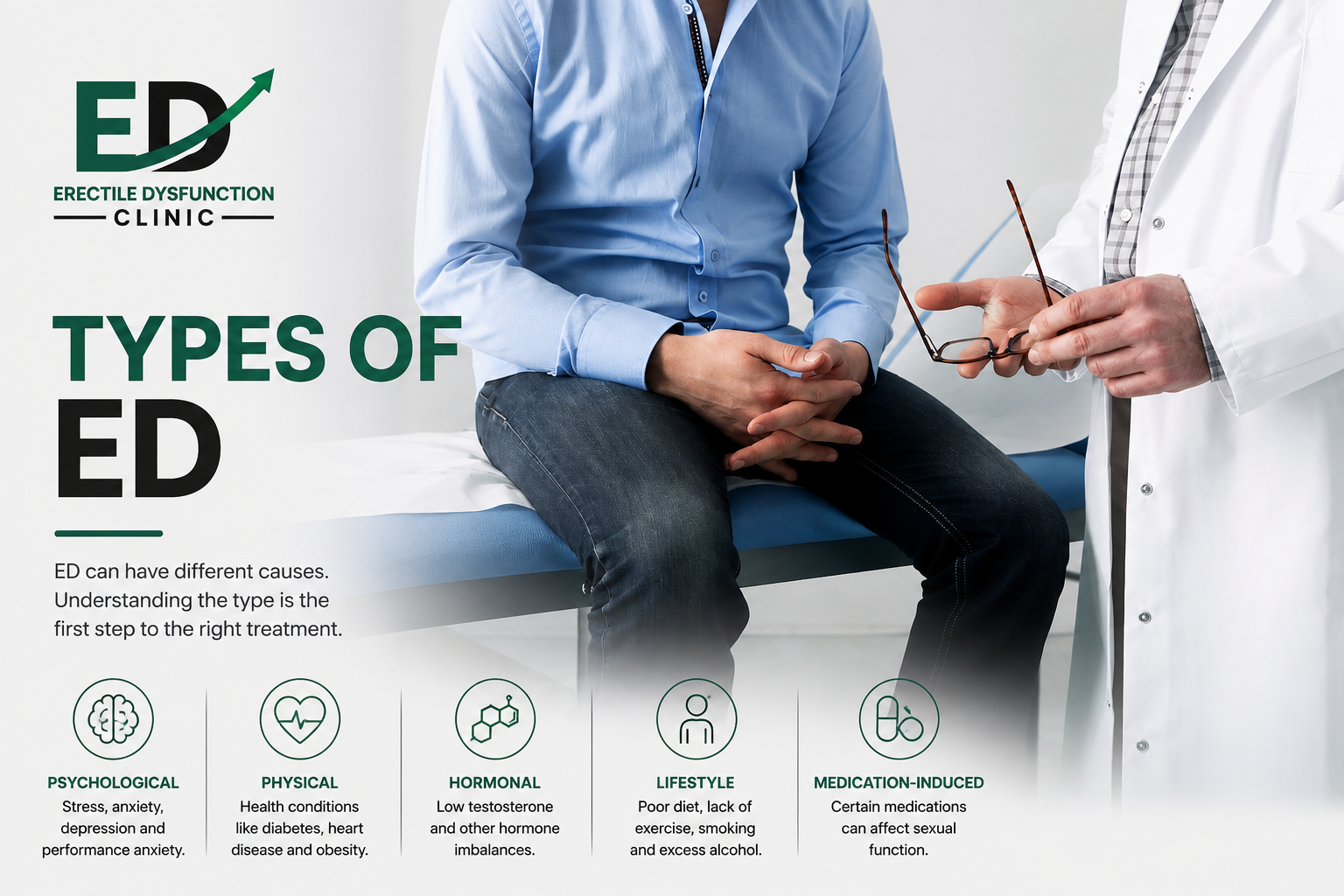
Tap any type to see what commonly causes it and the pattern to look for.
An erection depends on blood flooding into the penis and staying trapped there, vascular ED happens when arteries feeding that process narrow (restricting inflow) or veins fail to trap blood properly (a "venous leak," letting it drain away too fast).
High blood pressure, high cholesterol, diabetes, smoking, obesity, heart disease.
Gradual onset, erections that are softer than they used to be, difficulty across most or all situations.
An erection starts as a nerve signal. When the nerve pathway between brain, spine and penis is disrupted, arousal doesn't translate into an erection properly, however strong the desire.
Diabetes-related nerve damage, spinal cord injury, multiple sclerosis, pelvic or prostate surgery, Parkinson's disease.
Reduced sensation may accompany the erectile difficulty; often sudden onset if linked to surgery or injury.
Testosterone underpins both desire and the erectile process. When levels drop meaningfully, or thyroid hormones are out of balance, both can suffer together.
Age-related testosterone decline, obesity, certain pituitary or testicular conditions, thyroid disorders.
Reduced desire alongside reduced function, fatigue, low mood, reduced morning erections.
Here, the physical machinery works fine, the mind interferes with the process. Anxiety triggers stress hormones that directly counteract the relaxation response an erection needs.
Performance anxiety, depression, chronic stress, relationship conflict, past sexual trauma, guilt or shame around sex.
Normal erections while asleep, on waking, or alone, but difficulty specifically with a partner or in "performance" situations.
A side effect rather than an underlying disease process.
Some blood pressure medications, antidepressants (particularly SSRIs), antihistamines, recreational drugs, and heavy or chronic alcohol use.
Never stop a prescribed medication on your own, talk to the prescribing doctor about alternatives, and mention it at your ED consultation so it's factored into your programme.
In practice, most ED isn't purely one type. A common pattern: a physical cause (say, early vascular changes) causes a failure; the failure creates anxiety; the anxiety then causes further failures, independent of the original physical issue. Now two mechanisms are running at once.
This is actually good news to understand, it explains why addressing only one angle ("just relax" or "just take a pill") so often falls short, and why a proper assessment covering both physical and psychological ground gets better results.
A few signal questions worth honestly answering:
Are morning/solo erections normal, but partnered sex difficult?
Points toward PsychogenicDid it come on gradually, alongside other health changes?
Points toward Vascular or HormonalDid it start suddenly after surgery, injury, or a new medication?
Points toward Neurogenic or Drug-InducedIs desire also reduced, alongside fatigue or low mood?
Points toward Hormonal 5.05.0Top Rated ServiceVerified by TrustindexTop Rated Service
- 5.0 Excellent rating Last 12 months
- New reviews collected regularly Recent review activity detected
- Responds to customer reviews 100% response rate within 48 hours
- Verified by Trustindex Based on real customer reviews Learn more
Posted on Google
 Sbongakonke Myeni37 days ago
Trustindex verifies that the original source of the review is Google.
Good service and friendly staff.Posted on Google Philani Philastzozi39 days agoGood service and professional customer are. Philani from SoshanguvePosted on Google
 Mahlangu Mdu48 days agoExcellence service and professional staff. I am very hapy with the results. Thank you for taking care of my problem, Mr Mahlangu from Pretoria East
Can I have more than one type of ED at once? Yes, mixed ED, combining physical and psychological factors, is extremely common.
Which type of ED is most common? Vascular causes are the most common physical type, but psychological factors are involved in a large proportion of cases, especially in younger men.
Does the type of ED affect which treatment works? Significantly. Matching treatment to type, rather than using a generic approach, is the main driver of good outcomes.