
Subtotal $0.00
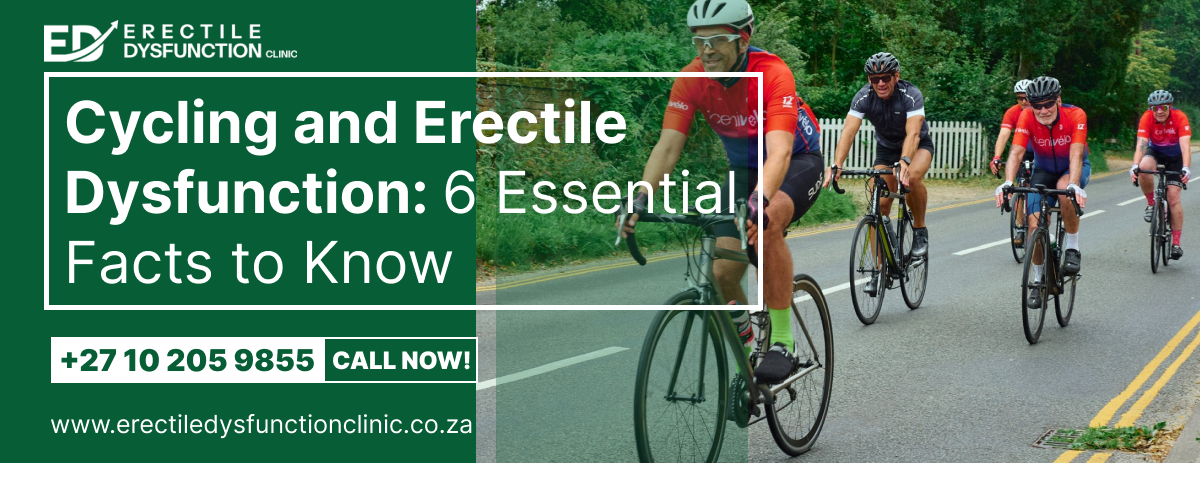
Cycling and erectile dysfunction have a genuinely well-documented, mechanical connection, distinct from most causes covered on this site. Unlike general aerobic exercise, which research shows tends to help erectile function overall, cycling’s specific risk comes from sustained pressure on the perineum, not from the exercise itself. Here are six essential facts, including some genuinely practical fixes.
1. The Mechanism Is Mechanical, Not Vascular Like Most Other Causes
A bicycle saddle can compress the pudendal nerve and arteries that supply sensation and blood flow to the penis, between the saddle and the pelvic bone. According to a review in the Journal of Sexual Medicine, studies measuring penile oxygen levels directly have confirmed blood flow drops significantly while seated, and returns to normal when standing off the saddle.
2. Risk Is Dose-Dependent, Highest Above Roughly 3 Hours a Week
According to Harvard Health Publishing, drawing on the Massachusetts Male Aging Study, risk was highest among men cycling more than 3 hours a week. Large studies of recreational cyclists have found no meaningfully higher ED risk compared with other athletes like swimmers or runners, this is genuinely more relevant to frequent, high-volume riders than casual cyclists.
3. Saddle Design Makes a Real, Measurable Difference
A systematic review and meta-analysis found no-nose saddles and central cutout designs significantly reduce perineal pressure and improve penile oxygen levels compared with standard saddles, at the cost of somewhat reduced stability. This is a genuine, evidence-supported fix, not just a marketing claim.
4. Handlebar Height Matters More Than You’d Expect
Research published in the Journal of Urology found handlebars positioned parallel with or higher than the saddle increased ED risk compared with lower handlebar positions, likely because a more upright position shifts weight forward onto the perineum. A proper bike fit, checking both saddle and handlebar height, is a genuinely underused fix.
5. Standing on the Pedals Periodically Is a Simple, Effective Habit
The same meta-analysis found standing on the pedals roughly every ten minutes helps relieve sustained pressure and is a practical, widely applicable strategy, no new equipment required. Recumbent bikes, which use a reclined position, avoid the seated compression issue almost entirely, though they’re a bigger lifestyle change for most cyclists.
6. This Is Usually Temporary, and Cycling’s Overall Benefit for ED Still Holds
Persistent ED from cycling alone is uncommon, most effects resolve with equipment or technique changes. Genuinely important context: cycling’s cardiovascular benefits, the same ones covered in our exercise for erectile dysfunction guide, may still reduce overall ED risk. This isn’t a reason to stop cycling, it’s a reason to set your bike up properly.
A Private Self-Check
A few questions worth reflecting on:
1. How many hours a week do you typically spend cycling?
2. Do you experience numbness or tingling in the genital area during or after rides?
3. Has your bike had a proper fit check, including saddle and handlebar height?
4. Do you already stand on the pedals periodically during longer rides?
5. Has any numbness or erectile difficulty persisted for more than 24 hours after riding?
2. Do you experience numbness or tingling in the genital area during or after rides?
3. Has your bike had a proper fit check, including saddle and handlebar height?
4. Do you already stand on the pedals periodically during longer rides?
5. Has any numbness or erectile difficulty persisted for more than 24 hours after riding?
If numbness or difficulty has lasted more than 24 hours, or keeps recurring despite equipment changes, that’s worth a proper medical assessment rather than continuing to adjust on your own.
Frequently Asked Questions | Cycling and Erectile Dysfunction
Should I stop cycling if I have ED?
Not necessarily, try saddle and bike-fit changes first, most cycling-related effects are temporary and resolve with proper setup. Cycling’s overall cardiovascular benefits for erectile health still apply.
Is a no-nose saddle actually worth trying?
Yes, this has genuine evidence behind it, reducing perineal pressure and improving penile blood oxygen levels compared with standard saddles.
How much cycling is “too much”?
Research points to increased risk above roughly 3 hours a week, though this varies by individual, saddle setup, and riding position.
Is genital numbness after cycling normal?
Occasional, brief numbness that resolves quickly is common and not usually concerning. Numbness lasting more than 24 hours, or that keeps recurring, is worth a proper assessment.
Does this affect recreational cyclists as much as serious riders?
No, large studies have found little added ED risk in recreational cyclists compared with other athletes, this is more relevant to frequent, high-volume riders.
Should I get a bike fit professionally done?
It’s a reasonable, low-cost step, given that both saddle design and handlebar height have genuine evidence behind their effect on perineal pressure.
Reviewed by George Mulaudzi, Naturopath, Erectile Dysfunction Clinic. This article provides general educational information and is not a substitute for personalised medical advice, diagnosis or emergency care. Seek medical assessment for genital numbness or erectile difficulty persisting more than 24 hours, or recurring despite equipment changes.


Comments are closed