
Subtotal $0.00
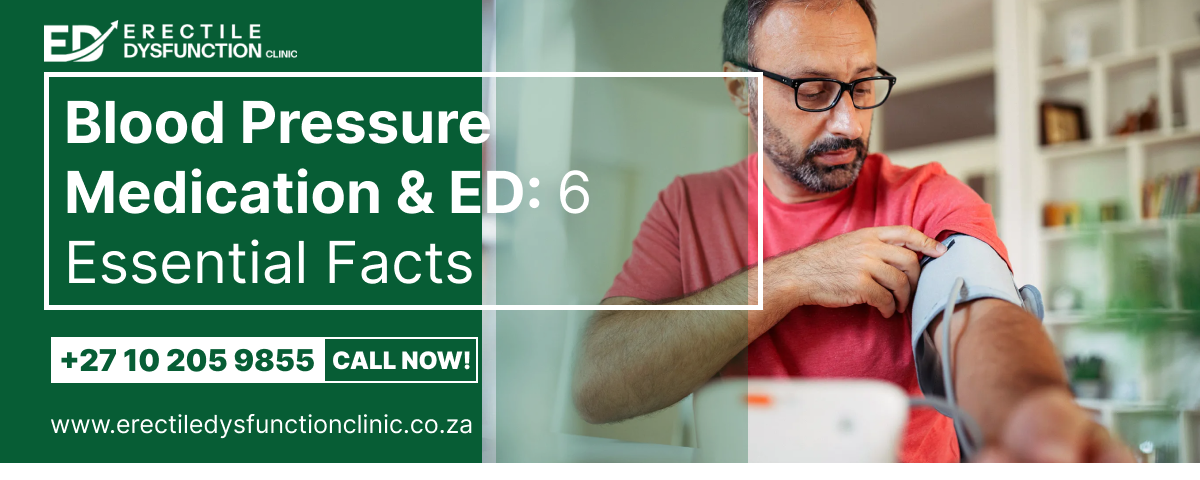
Before anything else: never stop or change your blood pressure medication because of erectile dysfunction, or for any reason, without speaking to your doctor first. Uncontrolled high blood pressure carries serious risks of its own, and it’s also an independent cause of ED in its own right.
Blood pressure medication and erectile dysfunction are linked closely enough to deserve a proper, specific breakdown, beyond the brief mention in our broader guide to medications that cause ED. Not every blood pressure medicine carries the same risk, and one class may actually help. Here are six essential facts.
1. Blood Pressure Medications Fall Into Three Distinct Categories for ED
According to a review published by the European Society of Cardiology, antihypertensive drugs have detrimental effects (diuretics, older beta-blockers, centrally acting agents), neutral effects (calcium channel blockers, ACE inhibitors), or potentially beneficial effects (angiotensin receptor blockers, and specifically nebivolol among beta-blockers) on erectile function.
2. ACE Inhibitors Are Essentially Neutral, Reassuring News for Many Men
ACE inhibitors, a very commonly prescribed class, are associated with ED in fewer than 1% of patients, according to WebMD. If you’re on this class and experiencing ED, it’s genuinely worth considering other causes too, rather than assuming this specific medication is the culprit.
3. ARBs May Actually Improve Erectile Function
One striking study of an ARB medication found the proportion of participants reporting ED dropped from 75% to 12% after 12 weeks of treatment, with sexual satisfaction rising from 7% to 58%. This is a genuinely notable finding, this class of blood pressure medication doesn’t just avoid causing ED for many men, it may actively help.
4. Not All Beta-Blockers Are Equal, Nebivolol Stands Out
Beta-blockers as a class are generally associated with higher ED risk, but this isn’t uniform across every drug in the class. Nebivolol specifically is considered potentially beneficial rather than detrimental, working through a different mechanism than older beta-blockers. If you’re on a beta-blocker and experiencing ED, this is a genuinely useful, specific thing to raise with your doctor, rather than assuming all options in this class carry the same risk.
5. Untreated High Blood Pressure Itself Causes ED, Independent of Medication
This is genuinely important context: blood pressure elevation on its own, separate from any medication, is associated with increased ED risk, while successful blood pressure control is associated with erectile function benefit. Stopping medication to “solve” ED can backfire badly, uncontrolled hypertension is itself a cause of the exact problem you’re trying to fix.
6. Switching, When Appropriate, Has Shown Real Clinical Benefit
Clinical research supports that switching from a detrimental-tier medication to a neutral or beneficial-tier one, done properly under medical supervision, genuinely improves erectile function in hypertensive men experiencing ED. This is a real, evidence-based option, but it’s your doctor’s call, based on your full cardiovascular picture, not a decision to make alone.
A Private Self-Check
A few questions worth reflecting on:
1. Do you know which specific class of blood pressure medication you’re on?
2. Did your ED begin or worsen around when you started or changed this medication?
3. Is your blood pressure currently well-controlled, or still being adjusted?
4. Have you already stopped or reduced your dose yourself because of this?
5. Have you mentioned this specific side effect to your prescribing doctor?
2. Did your ED begin or worsen around when you started or changed this medication?
3. Is your blood pressure currently well-controlled, or still being adjusted?
4. Have you already stopped or reduced your dose yourself because of this?
5. Have you mentioned this specific side effect to your prescribing doctor?
Not a diagnosis, just a way to think through your situation. If you’ve stopped your medication yourself, please speak to your doctor as soon as possible.
Frequently Asked Questions | Blood Pressure Medication and Erectile Dysfunction
Should I stop my blood pressure medication if it’s causing ED?
No, please don’t stop without speaking to your doctor first. Uncontrolled blood pressure carries serious risks and is itself a cause of ED.
Which blood pressure medications are safest for erectile function?
ACE inhibitors and calcium channel blockers are generally neutral, while ARBs and nebivolol have shown potentially beneficial effects in research, though the right choice depends on your full health picture.
Are all beta-blockers equally risky for ED?
No, nebivolol specifically stands apart from older beta-blockers in the research, worth discussing by name with your doctor if you’re concerned.
Can switching medications really help?
Yes, clinical studies support real improvement when switching from higher-risk to lower-risk or beneficial-tier medications, done properly under medical supervision.
I’m on an ACE inhibitor and still have ED, what does that mean?
Since ACE inhibitors are associated with ED in fewer than 1% of patients, it’s worth exploring other possible causes rather than assuming this specific medication is responsible.
Can I take a PDE5 inhibitor alongside blood pressure medication?
This needs checking with your doctor specifically, since combining ED medication with blood pressure treatment requires medical oversight, particularly to rule out any nitrate-related interactions.
Reviewed by George Mulaudzi, Naturopath, Erectile Dysfunction Clinic. This article provides general educational information and is not a substitute for personalised medical advice, diagnosis or emergency care. This practice does not prescribe or adjust blood pressure medication; all decisions about your treatment must be made with your prescribing doctor. Never stop or change blood pressure medication without medical guidance.


Comments are closed