
Subtotal $0.00
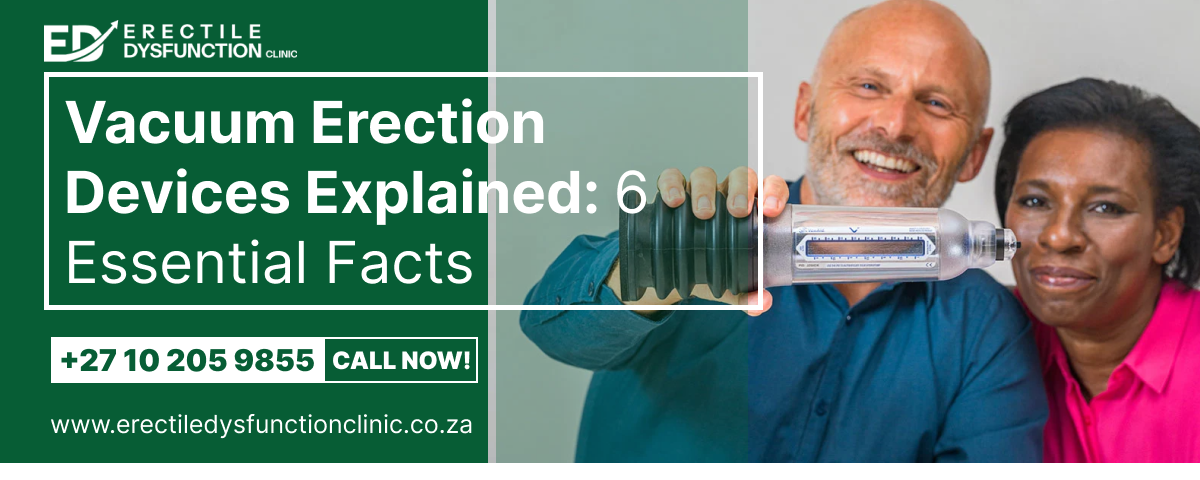
Vacuum erection devices explained simply: a cylinder creates gentle negative pressure to draw blood into the penis, and a constriction ring at the base holds it there for intercourse. Unlike oral medication, this works mechanically rather than chemically, which makes it useful in situations where pills aren’t an option. Here are six essential facts.
1. It Works Mechanically, Regardless of the Underlying Cause
A vacuum erection device (VED) uses negative pressure to distend the penile tissue and draw blood in, then a constriction ring prevents that blood from draining back out, according to a review in the International Consultation on Sexual Medicine consensus. Because it draws blood in mechanically rather than relying on nerve signalling or chemical pathways, it can work even when nerve damage or vascular issues would limit other treatments.
2. Effectiveness Is Genuinely High for the Right Candidate
Studies report 84 to 92% of users achieve a satisfactory erection with proper use, with self-reported satisfaction ranging from around 68 to 98%, and partner satisfaction often even higher. This isn’t a niche, poorly-tolerated option, it’s a genuinely effective one for many men.
3. Particularly Useful When PDE5 Inhibitors Aren’t an Option
VEDs are especially valuable for men who can’t safely take PDE5 inhibitor tablets, for example, men on nitrate medication, where the absolute contraindication covered in our PDE5 inhibitors guide rules out that treatment entirely. A VED avoids that specific interaction risk altogether, since it doesn’t involve any medication.
4. A Key Use: Rehabilitation After Prostate Surgery
VEDs are widely used, sometimes without the constriction ring, specifically to maintain tissue oxygenation and support recovery following prostate surgery, part of the broader recovery picture covered in our prostate and ED guide. According to a review in the International Journal of Impotence Research, regular use shortly after surgery is thought to support better long-term erectile function during the recovery period.
5. The One Safety Rule That Matters Most: 30 Minutes Maximum
The constriction ring should never stay on for more than 30 minutes, every clinical source on this topic repeats this rule consistently, since longer use can cause bruising or tissue damage. This is the one instruction worth remembering above all else if you use one of these devices.
6. Real, Usually Manageable Side Effects Are Worth Knowing About
Common effects include temporary coolness or slight discolouration of the penis, reduced sensation, and mild bruising, most are minor and manageable. The ring temporarily blocks the release of semen during orgasm, which redirects harmlessly rather than causing any problem, sensation itself is preserved. Men with certain conditions, including bleeding disorders, Peyronie’s disease, or a history of priapism, should discuss suitability with a doctor first.
A Private Self-Check
A few questions worth reflecting on:
1. Are you unable to take PDE5 inhibitor tablets, for example due to nitrate medication?
2. Have you had prostate surgery and been advised about penile rehabilitation?
3. Do you have a bleeding disorder, Peyronie’s disease, or a history of priapism to discuss with a doctor first?
4. Would a non-medication option genuinely suit your situation better than tablets?
5. Are you comfortable with a mechanical device, or would a different treatment category suit you better?
2. Have you had prostate surgery and been advised about penile rehabilitation?
3. Do you have a bleeding disorder, Peyronie’s disease, or a history of priapism to discuss with a doctor first?
4. Would a non-medication option genuinely suit your situation better than tablets?
5. Are you comfortable with a mechanical device, or would a different treatment category suit you better?
Not a diagnosis, just a way to think through whether this treatment category fits your situation.
Frequently Asked Questions | Vacuum Erection Devices Explained
Do vacuum erection devices actually cure ED?
No, they don’t cure the underlying cause, they provide a mechanical erection for intercourse each time they’re used, which is different from resolving whatever’s causing the ED.
Can I use one alongside PDE5 inhibitor medication?
Some men do combine the two, sometimes with enhanced results, but this is a decision to make with your doctor rather than on your own.
Where do I get a proper, medical-grade device?
Speak to your GP or a urologist, who can guide you toward a quality device with a vacuum limiter and correct sizing, rather than an unregulated option bought online.
Does it feel like a natural erection?
Not entirely, some men notice reduced sensation, coolness, or less stability at the base compared with a natural erection, though most find it works well enough for intercourse.
How long does it take to get comfortable using one?
Many men need a few practice sessions before feeling confident, initial frustration is normal and usually improves with familiarity.
Is this a good option after prostate surgery specifically?
Often yes, it’s commonly recommended as part of penile rehabilitation following prostate surgery, discuss the right protocol and timing with your urologist.
Reviewed by George Mulaudzi, Naturopath, Erectile Dysfunction Clinic. This article provides general educational information and is not a substitute for personalised medical advice, diagnosis or emergency care. Never leave a constriction ring in place for more than 30 minutes. Discuss suitability with a doctor if you have a bleeding disorder, Peyronie’s disease, or a history of priapism.


Comments are closed