
Subtotal $0.00
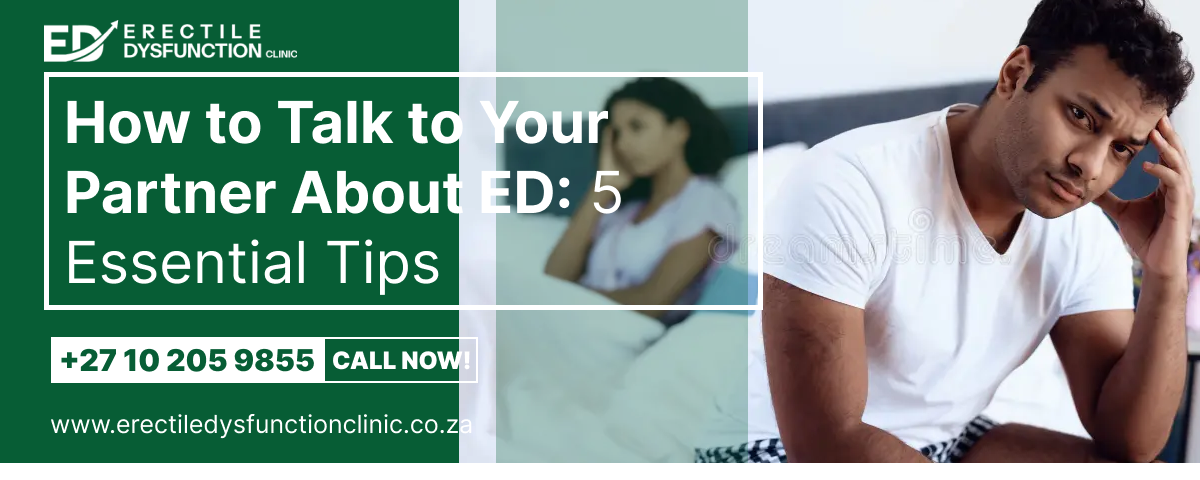
How to talk to your partner about erectile dysfunction is a question most men never plan for, and the silence often does more damage to a relationship than the ED itself. Doctors sometimes call ED “the couple’s disease,” because it rarely affects just one person. Here are five essential tips for having this conversation well.
1. Remember This Is a Shared Issue, Not a Solo Problem
According to Harvard Health Publishing, good communication is the foundation that makes working through ED together possible, and avoiding the conversation tends to cause more relationship strain than the condition itself. Framing this as “our situation” rather than “my problem” changes the whole tone of the conversation from the start.
2. Choose the Right Moment, Not the Heat of the Moment
Bringing this up right after a difficult moment in bed rarely goes well for either person. A calmer setting, a walk, a quiet evening, over coffee, gives both of you room to talk without the pressure of the moment itself attached to it. Plan roughly what you want to say beforehand, it doesn’t need to be perfect, just honest.
3. Separate the Condition From Attraction and Masculinity
This is often the hardest part, and the most important. According to the University of Utah Health, partners commonly misread ED as disinterest or reduced attraction, when it’s usually linked to physical or psychological factors that have nothing to do with how a man feels about his partner. Naming that directly, clearly and early, removes a lot of unnecessary hurt on both sides.
4. Go Through the Process Together Where You Can
Attending a consultation together, where appropriate, helps a partner understand what’s actually being addressed and reduces the isolation ED can otherwise create. It also means both people hear the same honest information at the same time, rather than one partner relaying a filtered version afterward.
5. Keep Intimacy Broader Than Just Intercourse While You Work Through It
Treating ED often takes weeks to months, not one appointment. In that time, maintaining closeness through other forms of intimacy keeps pressure off performance specifically, without putting the relationship on hold while treatment progresses.
A Private Self-Check
A few questions worth reflecting on before you start the conversation:
1. Have you actually told your partner what’s going on, or have they had to guess?
2. Have you found a calm moment to talk, rather than right after a difficult experience?
3. Have you made clear that this isn’t about how you feel about them?
4. Would they want to come to a consultation with you, if that’s something you’re both comfortable with?
5. Have you talked about staying close in other ways while you work through this?
2. Have you found a calm moment to talk, rather than right after a difficult experience?
3. Have you made clear that this isn’t about how you feel about them?
4. Would they want to come to a consultation with you, if that’s something you’re both comfortable with?
5. Have you talked about staying close in other ways while you work through this?
This isn’t a checklist to get “right,” just a starting point for a conversation that usually goes better once it’s actually started.
Frequently Asked Questions | How to Talk to Your Partner About Erectile Dysfunction
What if my partner reacts badly at first?
It’s common for an initial reaction to include worry, confusion or even hurt feelings. Give it time and keep the conversation open rather than shutting down after one difficult exchange.
Do I have to use clinical language when I bring it up?
No, use whatever words feel natural and clear to you. What matters is being honest and direct, not the specific terminology.
Should I bring it up even if I don’t have a diagnosis yet?
Yes, you don’t need an official diagnosis to have an honest conversation. In fact, talking about it early often makes seeking assessment feel less isolating.
Is it normal for this to affect my partner emotionally too?
Very normal. ED genuinely affects both people in a relationship, and acknowledging that openly tends to bring couples closer rather than further apart.
What if we’ve been avoiding this for a long time already?
It’s never too late to start. A late conversation is still better than continued silence, and most couples find relief once it’s finally out in the open.
Should couples counselling be part of this?
For some couples, yes, particularly where ED has caused ongoing tension or distance. It’s a reasonable, legitimate option alongside addressing the physical side.
Reviewed by George Mulaudzi, Naturopath, Erectile Dysfunction Clinic. This article provides general educational information and is not a substitute for personalised medical or relationship counselling advice. Erectile dysfunction can be associated with cardiovascular, hormonal, neurological, medication-related or psychological factors, a proper assessment is the best way to understand your own situation.


Comments are closed