
Subtotal $0.00
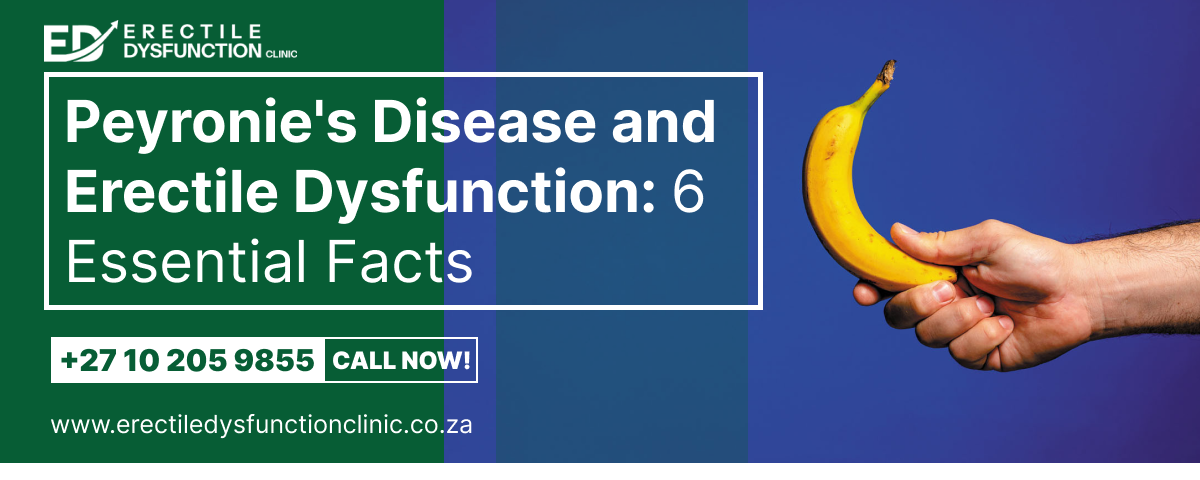
Peyronie’s disease and erectile dysfunction frequently occur together, and understanding the distinction matters, because one common mistake, both by men themselves and sometimes by doctors, is treating the whole picture as “just ED” when there’s actually a separate, identifiable condition also at play. Here are six essential facts.
1. What Peyronie’s Disease Actually Is
Peyronie’s disease is a connective tissue disorder where a fibrous plaque, often linked to a traumatic event or abnormal wound healing, forms within the penis, according to research published in PMC. This plaque can cause curvature, pain, and changes in length or shape during an erection. It affects up to around 10% of adult men, though estimates vary widely and are historically thought to be underestimated.
2. ED Co-Occurs in a Substantial Share of Cases
Studies find ED in roughly 40 to 60% of men with Peyronie’s disease, with one large retrospective study of over 1,000 patients reporting 58.1%. According to a review in the Cleveland Clinic Journal of Medicine, it isn’t entirely clear which condition tends to come first, the relationship appears to run in both directions.
3. This Is Genuinely Often Misdiagnosed or Missed Entirely
In a US population study, 74% of men who sought treatment for penile symptoms weren’t treated by the first doctor they saw, and 92% weren’t diagnosed with Peyronie’s disease at all. This is a genuinely significant diagnostic gap, worth knowing so you can specifically mention curvature, deformity, or a palpable lump, not just erectile difficulty, at your assessment.
4. The Psychological Impact Is Real and Well-Documented
Research has found depression significantly more common in men with both Peyronie’s disease and ED together than in men with curvature alone, and distress tends to increase with the degree of curvature. This is worth naming directly and without judgement, the psychological side of this condition is a legitimate part of the picture, not something to push through silently.
5. The Course Is Genuinely Variable, Pain Often Improves, Curvature Usually Doesn’t Resolve on Its Own
According to American Urological Association guidance, penile pain associated with Peyronie’s disease tends to improve over time in most men without specific treatment, but the curvature itself is less likely to resolve without intervention. This is useful for setting realistic expectations, one symptom often gets better on its own, the other usually needs addressing directly.
6. Real Treatment Options Exist, and Addressing Both Conditions Together Matters
Options range from oral medication and intralesional injections to traction therapy and, for more significant curvature, surgery. Shared risk factors, including diabetes, smoking and obesity, overlap directly with several causes covered elsewhere on this site. Importantly, curvature alone can prevent satisfactory intercourse independent of erectile capacity, so treating ED without addressing the Peyronie’s disease, or vice versa, often won’t fully resolve the problem, both need proper attention together.
A Private Self-Check
A few questions worth reflecting on:
1. Have you noticed any curvature, bending, or change in shape during an erection?
2. Can you feel a lump or hardened area anywhere on the shaft?
3. Do you experience pain specifically during erection, separate from any erectile difficulty?
4. Have you mentioned any curvature or deformity specifically, not just erectile difficulty, at a previous consultation?
5. Has this affected your mood or confidence beyond the physical symptoms?
2. Can you feel a lump or hardened area anywhere on the shaft?
3. Do you experience pain specifically during erection, separate from any erectile difficulty?
4. Have you mentioned any curvature or deformity specifically, not just erectile difficulty, at a previous consultation?
5. Has this affected your mood or confidence beyond the physical symptoms?
Not a diagnosis, just a way to think through your situation. If you notice curvature or a palpable lump, mention this specifically, not just ED generally, at your consultation.
Frequently Asked Questions | Peyronie’s Disease and Erectile Dysfunction
Is some curvature normal, or does it always mean Peyronie’s disease?
Mild, consistent curvature can be normal for some men. Newly developed curvature, especially with pain or a palpable lump, is worth a proper assessment rather than assuming either way.
Will the curvature go away on its own?
Pain often improves over time without treatment, but curvature is less likely to resolve on its own, treatment is usually needed to address it directly.
Can this practice diagnose or treat Peyronie’s disease?
No, diagnosis and treatment of Peyronie’s disease require a urologist. We can support lifestyle factors that overlap with shared risk factors and help you get the right referral.
Should I be embarrassed to bring this up?
Completely understandable to feel that way, but this is a genuinely common, well-recognised medical condition, doctors see it regularly, and it’s worth an honest conversation.
Does treating my ED automatically fix the curvature?
Not necessarily, the two often need separate, concurrent attention, since curvature itself can prevent intercourse regardless of erectile capacity.
What caused this in the first place?
Often linked to a traumatic event, sometimes related to intercourse, or abnormal wound healing, though the exact cause isn’t always identifiable in every case.
Reviewed by George Mulaudzi, Naturopath, Erectile Dysfunction Clinic. This article provides general educational information and is not a substitute for personalised medical advice, diagnosis or emergency care. This practice does not diagnose or treat Peyronie’s disease; where curvature, deformity, or a palpable lump is present, referral to a urologist is recommended.


Comments are closed